Why Supplemental Coverage Matters
Your Health Plan May Not Cover Everything
Even a strong health insurance policy comes with gaps — deductibles, copays, coinsurance, and services that simply aren't covered. For many people, a single unexpected illness or accident can translate into thousands of dollars in out-of-pocket costs.
Supplemental coverage helps protect what matters most: your savings, your income, and your financial stability. Rather than draining emergency funds or going into debt during a health event, supplemental plans provide an additional layer of financial support so you can focus on recovery.
Think of it as a financial safety net that sits alongside your existing coverage — not a replacement, but reinforcement.


SUPPLEMENTAL COVERAGE EXPLAINED
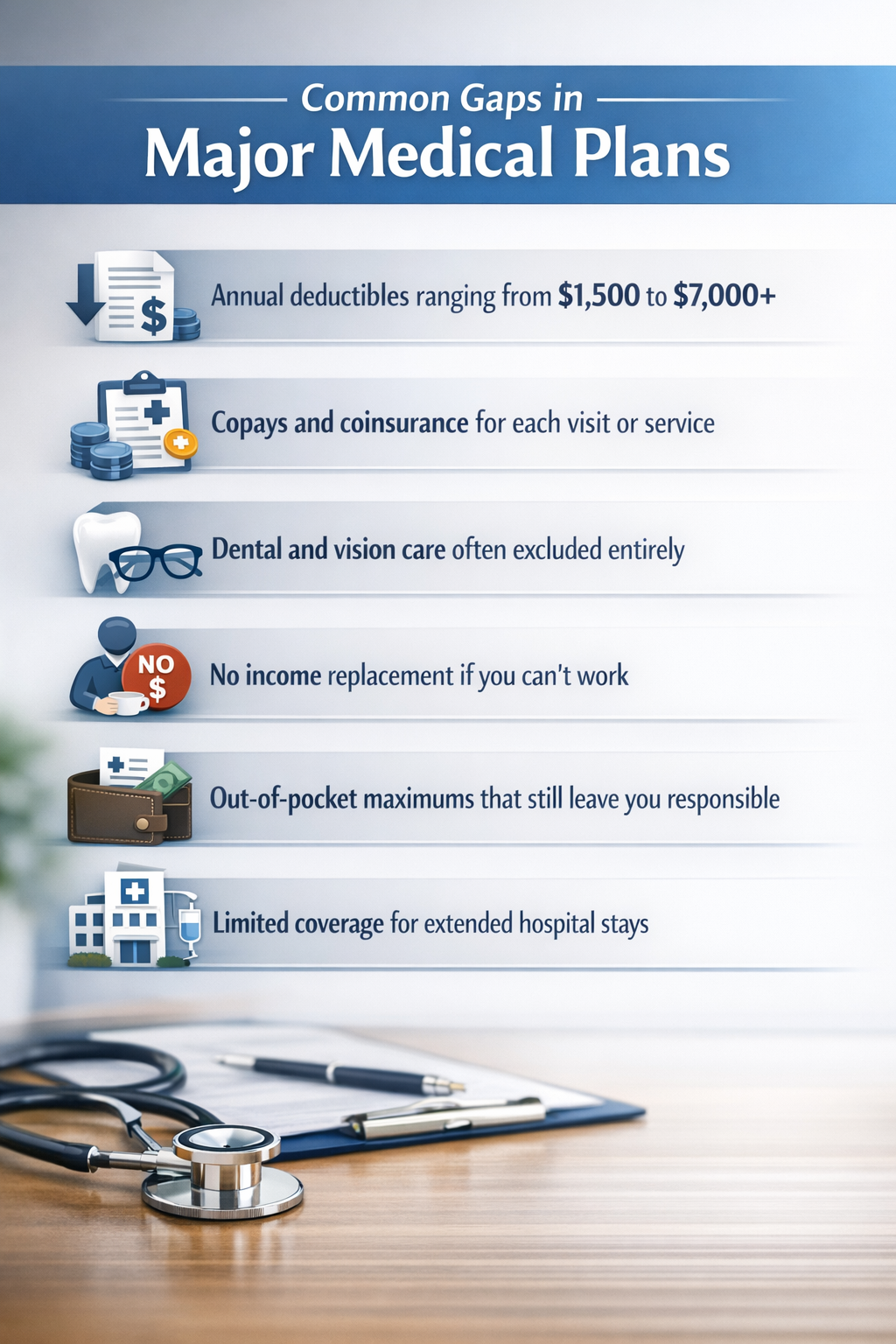
Supplemental coverage is designed to fill the financial gaps that traditional health insurance often leaves behind. While major medical plans help cover doctor visits, hospital care, and prescriptions, they don’t always eliminate deductibles, copays, coinsurance, or the everyday expenses that come with an illness or injury. That’s where supplemental plans step in.
These plans work alongside your existing health insurance—not in place of it. When a qualifying event occurs, such as an accident, hospitalization, or critical illness, benefits are typically paid directly to you. This gives you flexibility and control to use the funds where they’re needed most—covering out-of-pocket medical costs, replacing lost income, or handling normal household bills while you recover.
Supplemental coverage offers simple, affordable protection that adds an extra layer of financial security. With options tailored to your lifestyle, budget, and coverage needs, a personalized review can help you understand how supplemental plans fit into your overall protection strategy—clearly, confidently, and without pressure
Type of Supplemental Coverage Options:
-
Routine exams, cleanings, fillings, eyeglasses, and contact lenses are usually not covered by major medical insurance. Dedicated dental and vision plans help make these routine services more affordable and accessible throughout the year.
-
A sudden injury or serious diagnosis—such as cancer, a heart attack, or a stroke—can create medical bills and related expenses that exceed what insurance covers. These plans provide a one-time lump sum or scheduled payments to help cover deductibles, everyday living costs, or recovery-related expenses when you need extra financial support most.
-
Hospital stays can be costly even with health insurance. Hospital indemnity plans provide a fixed cash benefit for each day you’re admitted or receiving inpatient care, helping to offset additional out-of-pocket expenses that can accumulate during an extended stay.
-
If an illness or injury keeps you from working, your paycheck stops — but your bills don’t. Disability income protection replaces a portion of your earnings while you recover, helping you maintain financial stability, cover essential expenses, and focus on getting better without added stress.
Let’s get you a free personalized consultation
Why Buy Supplemental Health Coverage?
Let’s be realistic—health insurance is essential, but it rarely covers everything. Even with a good major medical plan, deductibles, copays, coinsurance, prescriptions, dental care, vision expenses, and unexpected costs can quickly add up. A single accident or illness can still leave you paying thousands out of pocket before your health plan fully kicks in.
Supplemental health coverage exists to help close those gaps.
Supplemental plans work alongside your primary health insurance to help offset the costs that traditional medical coverage often leaves behind. These plans can provide financial support for things like out-of-pocket medical expenses, routine care not fully covered by your main plan, and costs related to accidents, illness, or ongoing treatment. Instead of dipping into savings, using credit cards, or delaying care, supplemental coverage helps keep those expenses manageable and predictable.
It’s also about stability and flexibility. Medical events don’t just affect your health—they impact your income, your budget, and your family’s financial security. Supplemental coverage helps absorb the shock of unexpected bills so you can focus on recovery, not financial stress. Whether it’s a hospital stay, recurring prescriptions, dental procedures, or vision care, these plans provide an extra layer of protection when you need it most.
In a time when healthcare costs continue to rise faster than wages, supplemental coverage isn’t about having “more insurance”—it’s about smarter protection. It strengthens your overall coverage strategy and helps ensure one medical issue doesn’t create long-term financial consequences.
How Much Supplemental Coverage Do I Need?
The right amount of supplemental coverage depends on your existing health plan, your health needs, your budget, and your personal comfort with risk. The objective isn’t to over-insure—it’s to identify where your primary health insurance stops and make sure those gaps don’t become financial liabilities.
A helpful way to think about supplemental coverage is to focus on the areas where you’re most exposed to out-of-pocket costs:
• Out-of-Pocket Medical Expenses
Does your current plan leave you responsible for high deductibles, copays, or coinsurance? Supplemental coverage can help reduce the financial impact of those costs.
• Routine & Ancillary Care
Are dental, vision, hearing, or certain prescriptions limited or excluded under your main plan? Supplemental coverage can help make routine and ongoing care more affordable.
• Unexpected Events
If you were injured or became ill, could you comfortably handle medical bills, lost income, or added household expenses? Supplemental plans help provide a financial buffer when life doesn’t go as planned.
• Budget & Risk Tolerance
Would you rather pay a small, predictable monthly premium—or risk a large, unpredictable medical bill? Supplemental coverage helps smooth out those financial ups and downs.
Because no two situations are the same, supplemental coverage should be personalized. A simple review of your current health insurance helps identify where additional protection makes sense and how much coverage aligns with your needs today.
The goal is straightforward: strengthen your health insurance, protect your finances, and gain peace of mind—without paying for coverage you don’t need.

Why Supplemental Coverage Fills the Gaps — and Protects Your Financial Plan
Health insurance does a lot—but it doesn’t do everything. Deductibles, copays, coinsurance, and out-of-pocket maximums can still leave you exposed when illness or injury strikes. That’s where supplemental coverage steps in.
Supplemental insurance is designed to work alongside your major medical plan, helping cover the costs that traditional health insurance often doesn’t. Things like hospital stays, accidents, critical illnesses, dental, vision, and prescription gaps can quickly add up—even when you’re insured. Supplemental coverage helps soften that financial blow.
An unexpected accident or diagnosis can mean missed work, travel for treatment, or non-medical expenses that health insurance won’t touch. Supplemental plans often pay cash benefits directly to you, giving you flexibility to use the money where it’s needed most—bills, groceries, rent, or recovery costs.
For families, supplemental coverage adds an extra layer of protection and predictability. It helps prevent everyday medical needs or one unexpected event from turning into long-term financial stress.
Think of supplemental insurance as financial reinforcement. It’s not about replacing your health plan—it’s about strengthening it, closing the gaps, and giving you confidence that one health event won’t derail your budget or your future.
Supplemental coverage isn’t extra—it’s strategic protection for real life.
WHAT’S THE FIRST STEP TO TAKE?
The first step is a simple coverage review. Before choosing any plan, it’s important to understand what you already have in place and where potential gaps exist. Many people are surprised to learn that deductibles, copays, coinsurance, or income interruptions aren’t fully protected by their primary health insurance.
From there, we look at your lifestyle, budget, and risk tolerance to determine which supplemental options make sense for you. The goal isn’t to add unnecessary coverage—it’s to make sure one unexpected event doesn’t turn into a financial setback.
A quick, no-pressure review gives you clarity, shows you your options, and helps you decide the next step with confidence.
Common Questions About Supplemental Coverage
-
Possibly, yes. Health insurance is essential, but most plans still leave you responsible for deductibles, copays, and other out-of-pocket costs. Supplemental coverage helps fill those financial gaps, protecting your savings when a medical event occurs. The right answer depends on your specific plan and personal situation — which is exactly what a coverage review can help clarify.
-
No. Supplemental plans are not a substitute for major medical insurance and are not designed to replace it. They work alongside your existing health plan to provide additional financial support when you need it. If you're looking for primary health coverage, we can help with that as well.
-
In most cases, yes. Many supplemental plans pay cash benefits directly to you rather than to your provider. That flexibility means you can apply those funds wherever they're needed most — covering your deductible, paying rent or utilities during recovery, or addressing any other expense. Specific terms vary by plan, so we'll walk you through exactly how benefits are paid during your review.
-
Supplemental plans are generally designed to be budget-friendly, and many people are surprised by how affordable they are relative to the protection they provide. Premiums vary based on the type of plan, your age, and coverage level. Because we work with multiple carriers, we can compare options and help you find a plan that fits your needs and your budget.