Why This Matters
VA Benefits and TRICARE Are Valuable — But They Aren't Always Enough
Service members, veterans, and their families have access to some of the best benefit programs in the country. But even strong government programs come with gaps — coverage limitations, eligibility requirements, out-of-pocket costs, and circumstances where benefits simply don't apply.
As an independent advisor who specializes in serving the military community, we help you understand exactly what your current benefits cover and where you may be exposed. Then we work with you to build a plan that fills those gaps — without replacing or disrupting the benefits you've earned.
You've given a great deal in service to this country. Our job is to make sure your coverage reflects that.

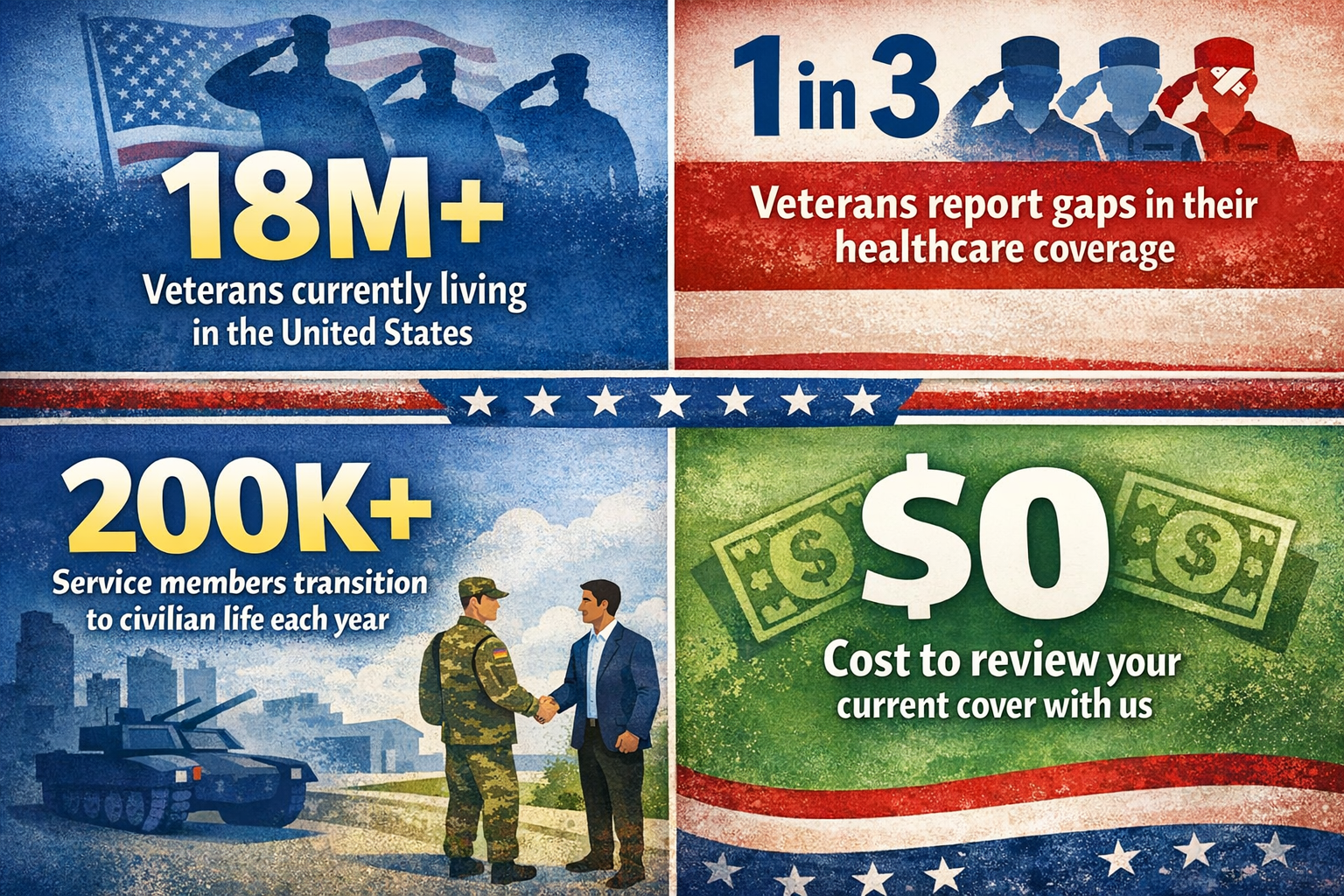

MILITARY & VETERAN SERVICES EXPLAINED
Military service members, veterans, and first responders have earned access to some of the strongest benefit programs available. VA healthcare, TRICARE, and employer-sponsored plans provide an excellent foundation—but they’re not always all-inclusive. Out-of-pocket costs, limited provider access, family coverage gaps, or income disruption during illness or injury can still create financial strain.
Military & Veteran Services focus on identifying and strengthening those weak points. A VA Benefit Gap Analysis reviews what your current benefits cover—and what they don’t—so you can make informed decisions. From there, supplemental plans can work alongside your existing coverage to help manage deductibles, copays, and unexpected expenses. For those transitioning out of active duty, transition coverage planning helps prevent lapses in protection during a critical life change. And for those who continue to serve on the front lines, first responder programs offer solutions tailored to the unique risks of the job.
This approach isn’t about replacing the benefits you earned—it’s about reinforcing them. Military and veteran-focused planning provides clarity, continuity, and peace of mind, ensuring your health, finances, and family remain protected long after the uniform comes off.
Military & Veteran Services Options:
-
Knowing exactly what your VA benefits do — and don’t — cover is the foundation of a strong benefits plan. We provide a complimentary, in-depth review of your VA eligibility and current benefits to identify any gaps and outline your options moving forward.
Full review of your current VA coverage
Side-by-side comparison with alternative plans
Identification of needs not covered by service-connected benefits
Clear, plain explanations at every step to help you make informed decisions
-
TRICARE provides strong foundational coverage, but cost shares, copays, and certain out-of-pocket expenses can still add up over time — especially in retirement. A TRICARE supplement plan helps cover those remaining costs so you're not caught off guard and can maintain predictable healthcare expenses. Covers TRICARE cost shares and copays. Available for retirees and eligible beneficiaries. Works alongside your existing TRICARE plan. No network restrictions in most cases.
-
The time between military service and civilian life is when health and benefits coverage are most at risk. If you’re separating, retiring, or moving to reserve status, we work with you to create a clear plan so there’s no gap in protection for you and your family. Pre-separation coverage planning Guidance for smooth TRICARE-to-civilian plan transitions Practical timing advice to prevent coverage lapses Strategies to maintain continuous family coverage
-
Law enforcement officers, firefighters, paramedics, and other first responders face unique occupational risks. We offer specialized coverage solutions that recognize those risks and provide meaningful income and health protection tailored to your profession.
Disability income protection for on-duty injuries
Accident and critical illness coverage
Supplemental health options for shift workers
Group and individual plan options available
Let’s get you a free personalized consultation
Why Buy Military & Veteran Supplemental Plans?
Military members, veterans, and their families often have solid primary coverage through VA healthcare, TRICARE, or employer-sponsored insurance. These benefits are well-earned and valuable—but they don’t always cover everything. Copays, cost shares, uncovered services, limited provider access, travel for care, and income disruption can still create unexpected financial pressure.
That’s where Military & Veteran Supplemental Plans come in.
Supplemental coverage is designed to work alongside your existing benefits—not replace them. When a qualifying event such as an accident, hospitalization, or serious illness occurs, benefits are typically paid directly to you. This gives you flexibility to use the money where it’s needed most—medical expenses, prescriptions, travel, household bills, or replacing lost income during recovery.
It’s also about financial stability. A health event doesn’t just affect your body—it can affect your paycheck, savings, and family security. Supplemental plans help absorb the financial shock so one unexpected situation doesn’t undo years of careful planning and service. As healthcare costs continue to rise, supplemental coverage provides an extra layer of protection tailored to the realities of military and veteran life.
This isn’t about having “more insurance.”
It’s about smarter protection—strengthening the benefits you already have.
What Type of Supplemental Coverage Do I Need?
The right supplemental coverage depends on your current benefits, health needs, budget, and personal comfort with risk. The objective isn’t to over-insure—it’s to identify where your primary coverage stops and make sure those gaps don’t become financial liabilities.
A simple way to evaluate your needs is to focus on where you’re most exposed:
• Out-of-Pocket Medical Costs
Do VA or TRICARE leave you responsible for copays, cost shares, or services outside the network? Supplemental plans can help reduce the financial impact of those expenses.
• Routine & Ancillary Care
Dental, vision, hearing, and certain prescriptions may be limited or excluded under your primary benefits. Supplemental coverage helps make routine and ongoing care more affordable.
• Unexpected Events & Income Impact
If an accident or illness temporarily sidelined you, could you handle medical bills and lost income at the same time? Accident, hospital, and critical illness plans provide a financial buffer when life doesn’t go as planned.
• Family Coverage Needs
Your spouse or dependents may have different coverage gaps than you. Supplemental plans can help coordinate protection across the entire household.
• Budget & Risk Tolerance
Would you rather pay a small, predictable monthly premium—or risk a large, unpredictable bill? Supplemental coverage helps smooth out financial uncertainty.
Because every service member and veteran’s situation is unique, supplemental coverage should be personalized. A simple benefit review can identify where additional protection makes sense and how much coverage aligns with your needs today.

Why Supplemental Coverage Is Especially Important for Military Families
Military families live a life unlike most others. While service brings pride, purpose, and earned benefits, it also comes with unique financial and healthcare challenges that can strain even the most disciplined household. Frequent relocations, deployments, changing duty statuses, and transitions between military and civilian life all create uncertainty—especially when it comes to healthcare access and income stability.
This is where supplemental coverage becomes more than just an add-on. For many military and veteran families, it’s a critical layer of financial protection.
WHAT’S THE FIRST STEP TO TAKE?
The first step is a simple benefits review. Before adding any supplemental plan, it’s important to clearly understand what your current military, VA, TRICARE, or employer coverage actually provides—and where gaps may exist. Many service members and veterans are surprised to learn that out-of-pocket costs, certain services, travel for care, or income disruption during illness or injury may not be fully protected.
From there, we look at your family situation, duty or veteran status, budget, and comfort with risk to determine which supplemental options truly make sense. This isn’t about adding coverage you don’t need—it’s about strengthening the benefits you’ve earned and making sure one unexpected event doesn’t create financial stress.
A quick, no-pressure review gives you clarity, highlights your options, and helps you decide the next step with confidence—so you can protect your family and your finances with intention.
Common Questions About Military & Veteran Services
-
It depends on your specific situation. VA benefits and TRICARE provide solid foundational coverage, but both programs have limitations — eligibility requirements, cost shares, and services that may not be covered. A complimentary review with us helps identify whether you have any meaningful gaps and what, if anything, makes sense to address.
-
No. Supplemental plans are designed to work alongside your existing benefits — not replace them. They activate when your primary coverage leaves a remaining balance or doesn't apply, helping reduce out-of-pocket costs without affecting your VA or TRICARE eligibility.
-
As early as possible — ideally six to twelve months before your separation or retirement date. Coverage transitions take time to plan properly, and waiting until the last minute can result in gaps. We work with transitioning service members to map out a timeline and ensure nothing falls through the cracks.
-
Most supplemental plans are designed to remain affordable for a variety of budgets. We compare options from more than 25 carriers to find coverage that better fits your financial needs and personal situation. After the review, there’s no requirement to enroll if you decide it isn’t right for you.
-
While we have a strong focus on serving the military community, first responders, and veterans, we work with individuals and families across a wide range of backgrounds. Our military and first responder specialization simply means we have a deeper understanding of the unique benefit structures and coverage needs in those communities.